Nestled in eastern India, Deoghar (literally “abode of gods”) is a sacred town famed for temples and tranquil hills. Located beside the Mayurakshi River in the Santhal Pargana division, about 240 km from Ranchi, Deoghar is surrounded by the Rajmahal Hills. Its name reflects the town’s spiritual fame: for centuries it has been a major Hindu pilgrimage center (the “cultural capital” of Jharkhand) with a mix of Bengali, Bihari, Tamil, and tribal heritage. The 22 Shiva temples here (including the towering Baba Baidyanath Jyotirlinga) draw millions of devotees every year.
Deoghar also pulses with folk music, festivals and fairs. During Shivratri, the Shravan monsoon month, and festivals like Navratri and Durga Puja the city comes alive with processions and rituals. As a traveler, you’ll find a mix of serene pilgrimage spots and lively cultural events. Throughout this guide, we share both detailed facts and practical tips from our own journey – from getting there to top sights, food, and safety advice. Every section uses up-to-date info and sources (as of 2025) to help you plan a smooth family trip to Deoghar.
Major Temples & Sacred Sites
Baba Baidyanath Dham (Jyotirlinga & Shaktipeeth)
At the heart of Deoghar stands Baba Baidyanath Dham, one of India’s most sacred temples. This 72-foot-high shrine is one of the twelve revered Shiva Jyotirlingas. Inside its east-facing sanctuary is the self-manifested Jyotirlinga of Lord Shiva. The temple complex actually includes 22 temples – the main temple (with the Shiva lingam) and 21 smaller shrines. According to legend, Ravana once carried this lingam here from the Ganges, but it became permanently rooted (hence the name Baidyanath, “Lord of Healing”). Baidyanath Dham is also tied to the Shakti Peeth tradition: it is said that the heart of the goddess Sati fell here, binding Shiva and Shakti together. Red threads link the main temple to the nearby Shakti temple, symbolizing their eternal bondincredibleindia.gov.in.
Architecturally, Baba Baidyanath Temple is ancient and impressive. It is said to have been built by the divine architect Vishwakarma and later expanded by the Maharaja of Gidhaurincredibleindia.gov.in. The spired stone structure resembles a blossoming lotus, topped by three golden vessels and a trident emblem (symbolizing Shiva) – a stunning sight against the skyincredibleindia.gov.in. Inside the courtyard you can circumambulate the central lingam and also visit many smaller idols (Parvati, Kali, Gayatri, Bhairav, etc.) around the templeincredibleindia.gov.in. From personal experience, the temple atmosphere is very devotional: priests perform daily rites like Rudra Abhishekam and Aarti with great reverenceincredibleindia.gov.in.

The temple’s timing is split: it opens early morning and closes in the afternoon, then reopens in the evening. Currently the timings are approx. 4:00–14:00 and 18:10–20:00incredibleindia.gov.in. (During the crowded Shravan month these hours may extend, so check with the temple office.) Entry queues can be long, especially on weekends or festivals. A VIP entry pass (about ₹500 per person) offers faster darshandarshantiming.com. It’s wise to arrive early or opt for an “Early Morning” slot if you can. Also note: footwear must be removed before entering temple grounds, and you can deposit shoes at the cloakroom. Light snacks and water are sold outside; inside the temple complex there are small kiosks for prasad (offering) items.
Other Major Temples (Naulakha, Basukinath, etc.)
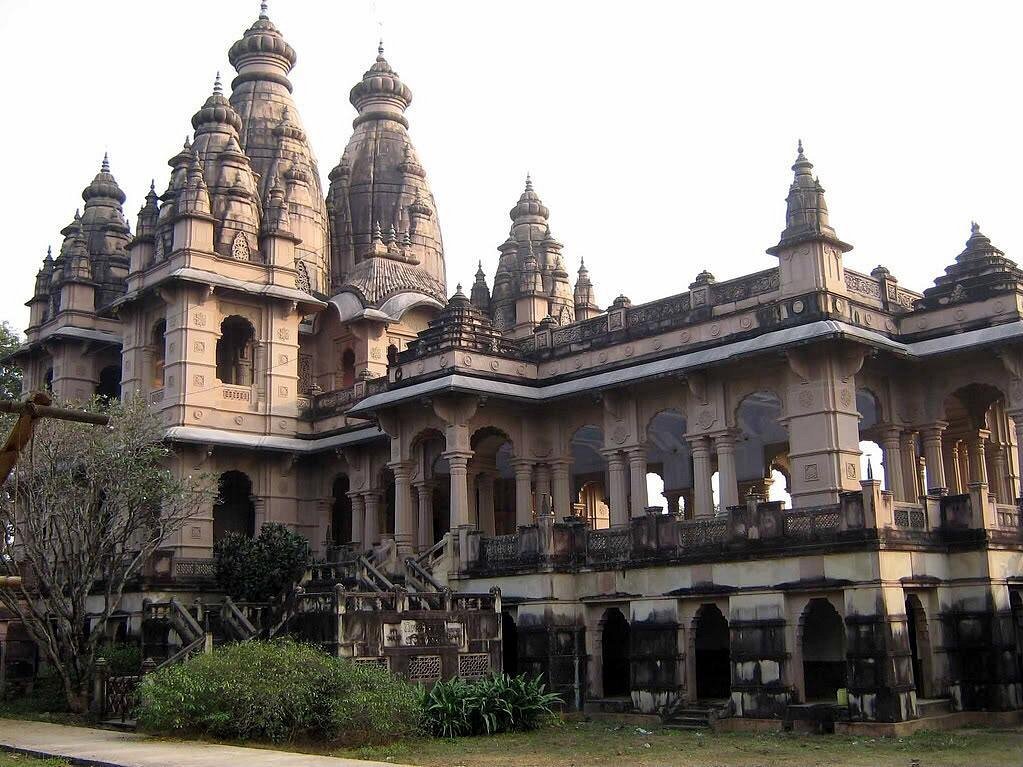
Deoghar’s temple circuit extends beyond Baidyanath. Just 1.5 km from the main temple is the Naulakha Mandir, named for the “nine lakh rupees” it cost to build. This 18th-century temple was commissioned by Queen Charushila and is dedicated to Radha and Krishnaincredibleindia.gov.in. Its striking design blends Mughal and Rajput elements: high spires, delicate filigree carvings, and an ornate dome that rises like a crownincredibleindia.gov.inincredibleindia.gov.in. The Naulakha Temple’s beautifully landscaped courtyard and halls are open to visitors. (Inside the picture: the white Naulakha Mandir gleaming in Deoghar’s sun.)
Another important temple is Basukinath, about 43 km from Deoghar (near road to Dumka). Basukinath is also a Shiva temple and a Shakti Peeth. Many pilgrims combine a visit to Baidyanath Dham with a stop at Basukinath: in the famous Shravan pilgrimage, devotees carry Ganga water 100 km from Sultanganj to pour first at Baidyanath and then offer the remainder at Basukinathincredibleindia.gov.in. So you could take a day trip to see Basukinath’s marble shrine and vibrant local fairs.
Within Deoghar town itself there are other small shrines worth a glance: for example the Shiv Ganga (a sacred pond) and Baiju Temple (linked to the folklore of Baiju, the disguised form of Lord Vishnu in the Ravana legend). There’s also Devasangha Math, a Krishna-centered temple, and the Maa Shitala Temple (goddess of smallpox). These are smaller sites but enrich the spiritual landscape. In our visits, we found that each temple has its own schedule of aarti and prasadam (sacred food), so plan accordingly (many temples allow quick darshan or blessings even if you are not doing the main Baidyanath darshan).
Spiritual Retreats & Ashrams
Satsang Ashram & Rikhiapeeth
Just north of Deoghar’s city center is the Satsang Ashram, headquarters of the Satsang movement founded by Guru Shri Anukulchandra. This sprawling compound includes grand temples, meditation halls, gardens, and even a zoo. We found the grounds very peaceful, with well-maintained shrines to Guruji and others. Importantly, Satsang Ashram runs the free Anandabazar kitchen that serves meals to anyone (especially pilgrims and the poor)incredibleindia.gov.inincredibleindia.gov.in. Even if you’re not a follower, visitors are welcome; many sit-in for a free vegetarian meal (simply ask the volunteers). The ashram also has a small museum of Guruji’s life. The vibe is calm – ideal if you seek quiet spiritual ambiance or just shade from the city.
Also Read My Siliguri Adventure: Gateway to the Himalayas and Local Delights
About 12 km north of Deoghar on Tapovan Road is Rikhiapeeth, also called Sri Sri Panch Dashanam. This is one of India’s oldest yoga ashrams, where the freedom fighter-turned-saint Swami Satyananda once meditatedincredibleindia.gov.inincredibleindia.gov.in. The ashram’s greenery and temples (including a Samadhi of Satyananda) feel very meditative. We noticed many monks and visitors sitting in quiet. Rikhiapeeth accepts guests in simple dorm rooms (you can call ahead to book). Since it’s on a hill, you might also see sunset views over Deoghar from here.
Nearby, not far off Tapovan Road, is Tapovan Pahar (Sacred Meditation Hill). This forested hill was reputedly used by ancient sages for penance. A footpath leads up to the Taponath Mahadev Temple and a holy pool atop the hillincredibleindia.gov.in. The climb has some caves and rocks with Shiva linga carvings. We hiked a short distance (bring good shoes and water) and enjoyed the quiet forest; it’s ideal for short treks and birdwatching. The temple there offers basic darshan of a Shivling. If you’re adventurous, the hilltop provides great views across Jharkhand countryside.
Shiv Ganga & Other Retreats
The Shiv Ganga tank (pond) near the Naulakha Temple area is considered sacred. It is said that dropping your kanwars or holy water here purifies your pilgrimage. Along its banks are small temples and shrines. Though not as grand as Baidyanath, walking around Shiv Ganga’s green water is a peaceful break from temple crowds.
Additionally, the Deoghar area has a Baidyanath Temple Dharamshala and a few cozy guesthouses run by spiritual missions and local families. For example, the Gurukul Bhawan (run by the temple trust) offers affordable rooms; the Satsang and Rikhiapeeth ashrams also provide simple lodging to guests. (We stayed in a family-owned lodge in town and found it friendly – locals often welcome pilgrims warmly.)
Nature & Scenic Attractions
Trikut Hills & Ropeway
If you need a break from temples, head to Trikut Pahar (“Three Peaks Hill”), just 10 km west of town. Trikut Hills has an adventure ropeway (Gagan Khatola) that glides up the hillincredibleindia.gov.in. The journey offers forest and city views. Once at the top, the main attraction is the Trikuta Mahadeva temple (another Shiva shrine) and panoramic vistas. On clear days you can see lush hills and the Ganges valley in the distance. The top also has small shops selling tea and snacks – perfect for a quick rest. We recommend going on a weekday or in the afternoon to avoid weekend crowds. The ropeway is safe and has weight limits; it’s fun for families and most people. Even without the ropeway, there are walking trails through the woods around Trikut, but note they can be steep. According to sources, Trikut Pahar offers a “360-degree view of Deoghar from its peak”incredibleindia.gov.in.
Nandan Pahar & Nandi Temple
On the east side of town rises Nandan Pahar, a small hill and park area. At its summit is a giant stone Nandi (Shiva’s bull) statue facing the city’s main Shiva templeincredibleindia.gov.in. Climbing up to the top (about 300 steps) gives you good exercise and a grand view. There’s also a children’s amusement park here with swings and rides, making it popular for families on weekends. Many locals picnic under the banyan trees. From our hike up Nandan Pahar, we enjoyed seeing the sun rise over Deoghar’s skyline. Nearby trails lead to a viewpoint for sunsets. The Nandi statue and a temple shrine next to it are a calm spot for quiet prayer.
Basukinath Hill & Others
A few kilometers beyond Basukinath town is Basukinath Hill Temple, another Shiva shrine (and Shakti Peeth). As mentioned, Basukinath is part of the shravan pilgrimage routeincredibleindia.gov.in. If you have 2-3 days in Jharkhand, consider a day-trip bus from Deoghar to Basukinath (it’s famous in its own right and smaller crowds outside peak season).
Other rural attractions include small villages with tribal culture and natural springs. The nearby Dhaus river valley has scenic spots for picnics. Also, if your trip coincides with fall (October-March), Jharkhand’s fields around Deoghar become very green and pleasant for walks outside the city.
Food & Cuisine
Local Specialties
Jharkhand’s food is simple and hearty. In Deoghar you’ll mostly find vegetarian fare (due to its pilgrimage nature), though some restaurants do serve chicken. The daily staples are roti (chapati), rice, lentils (dal), and seasonal vegetables. However, there are a few local specialties to try. The district notes mention dhuska and vada as famous fast foodsdeoghar.nic.in. Dhuska is a deep-fried pancake made from rice and lentil batter – crunchy on the outside and soft inside. It’s usually served with chutney. Vadas (like medu vadas) are lentil doughnuts that are also very popular. You’ll see roadside stalls making these, especially near markets.
Because of Jharkhand’s tribal heritage, unique ingredients like bamboo shoots (kusum, ruhi) and pumpkin flowers are used. We found deep-fried bamboo shoot pakoras and stuffed khukri mushroom curry on some menus – very delicious and different from usual South Asian dishesdeoghar.nic.in. Another rich local dish is tadka dal (lentils tempered with mustard oil and spices) and bhindi sabzi (okra curry). For desserts, don’t miss khoya peda (milk fudge) and khir mohan (like rasgulla stuffed with khoya) – these dry sweets are especially famous at temple prasad countersdeoghar.nic.in. Sweets like malpua (fried pancakes soaked in syrup) are common during festivals.
Across Deoghar’s markets you’ll also find generic Indian snacks: samosas, kachori, jalebi, etc. Because Deoghar is popular with visitors, many sweet shops and bakery vans appear near the temple selling laddus and halwa (for offerings).
Recommended Eateries
For sit-down meals, Deoghar has a handful of mid-range restaurants and cafés. Some popular names (frequented by locals and travelers) include Mayur Restaurant, Hotel Neelkamal, Cafe Spices, and Bharatimakemytrip.com. These serve North Indian thalis (rice, dal, sabzi, roti) and also sweets. We tried the dal and local vegetable curries at Mayur and found them tasty and hygienic. Cafe Spices is known for snacks like paratha and sweet lassi. There are also a few “pure veg” shuddh options near Shiv Ganga: simple dhaba-style spots where workers and pilgrims eat.
For a quick bite, try the dhuska stall near Jhumri Market (look for a dosa-like pan with sizzling batter). The crispy dhokla-like dhuska with chutney is very satisfying. Chai (tea) and gujiya (sweet filled pastry) are sold everywhere in the mornings.
If you enjoy non-veg, one small place, Avantika Restaurant, is known to serve chicken and goat curry (though many hotels do not offer meat at all). We tested a chicken curry at Avantika and it was decent, but veg options are more widespread.
At night, there’s a small night market near Dokriar Gate (outside main temple area) where you can munch on street foods like chowmein, rice bowls, kebabs, and sweetsmakemytrip.com. On a family outing, we enjoyed strolling through stalls selling fresh jalebi, shakkar paare, and sugarcane juice. Do watch your belongings in crowded markets, and stick to busy stalls if hygiene concerns you.
Travel Guide: Getting There & Around
Reaching Deoghar
- By Air: Deoghar now has a domestic airport (IATA: DGH), about 12 km from the city. Under India’s UDAN scheme, airlines run regular flights from Delhi, Kolkata, Patna and Ranchideoghar.nic.indarshantiming.com. Indigo began flights to Delhi (daily) in July 2022deoghar.nic.in, and also services to Kolkata, Patna, Ranchi. If you fly in, hire a prepaid taxi at the airport (roughly ₹300–500 to town) or book an app-cab. The new terminal is small and clean; we found check-in quick for the short flights.
- By Train: The nearest major railhead is Jasidih Junction (JSME), about 7 km west of Deoghardeoghar.nic.in. Jasidih is a busy station on the Howrah–Delhi mainline, with trains from Kolkata, Patna, Delhi, Mumbai, and moredeoghar.nic.in. From Jasidih you can hire an auto-rickshaw or taxi (a shared auto costs ~₹20) to reach Baba Baidyanath Templedarshantiming.com. There is also a smaller station called “Baidyanath Dham” inside town, but it has fewer trains; Baidyanath Dham and Deoghar stations connect to local destinations like Bhagalpur and Dumkadeoghar.nic.in.
- By Road: Deoghar is well-connected by national highways. For example, it’s about 230 km east of Patna, 278 km north of Ranchi, and 250 km from Kolkata (all by highway)darshantiming.comdeoghar.nic.in. Regular state-run and private buses link Deoghar to Ranchi, Jharkhand’s other cities, and even Bihar destinations like Gaya. Most buses and taxis approach via NH114A. We took a deluxe bus from Patna one evening; it was about 5–6 hours, with a few stops. The road is mostly two-lane so drive safely. If you rent a car or taxi, the drive from Patna passes scenic farmland and hills.
Local Transport
Once in Deoghar city, the main temple and market areas are best explored on foot or rickshaw. The town is compact: temples, markets and hotels are all within a few kilometers. Here are options:
- Auto-rickshaws & Tempos: Battery-operated autos run within town (fixed rates, around ₹10–20 for short rides). We often hailed them from near our hotel or temple to reach Nandan Pahar or markets. For longer trips (e.g. from Jasidih station to Baidyanath temple), share autos cost ~₹20–₹50 per person, or private auto/taxi ₹100–150darshantiming.com.
- Cycle-rickshaws: There are many hand-pulled or cycle rickshaws in the temple area. They charge ~₹5–10 for short hops (one or two stops). Good for quick errands or older folks who cannot walk far.
- Taxis & Cabs: App-based cabs (Uber/Ola) are limited, but local drivers use phones to arrange. We found taxis useful for out-of-town trips (e.g. to Basukinath or to Trikut Pahar ropeway). A local taxi driver charged us ~₹1000 for a full day around Deoghar sights (you should agree price in advance). For a one-way trip, Deoghar–Basukinath is about ₹500–700. If you have many family members, a private cab is most comfortable for long drives.
- On Foot: Many pilgrims prefer to walk between temple, market and guesthouses in the temple area (known as “Shiva Chowk”). The street between the main temple and Shiv Ganga is pedestrian-friendly but crowded. Shoes must be removed before temple (they can be stored in lockers or left with attendants for a few rupees).
Remember to carry bottled water (borewell water is not potable). We always kept a small bottle in our bags. There are purified water vendors near the temple gates. During peak season (July–August) it can get very crowded; families should stick together and keep children in sight. Signal-wise, mobile coverage is good; Temple offers free Wi-Fi in some areas and there are internet cafés in town.
Accommodation Guide
Budget & Mid-Range Stays
Deoghar caters to pilgrims on any budget. Near the temple complex there are numerous budget hotels and dharamshalas (pilgrim guesthouses). Many are basic AC or non-AC rooms with fan. The district administration provides a PDF list of guesthousescdn.s3waas.gov.in. As an example, Hotel Ashoka, Mayur Hotel, and Gitanjali Hotel are simple mid-tier places charging ₹500–1500 per night. We stayed at a family-run lodge (approx ₹800/night) which included a simple breakfast; it was clean and in walking distance of the temple.
The Baba Baidyanath Temple Trust and local temples also run dharamshalas offering free or donation-based lodging. For instance, Guru Ganga Ashram and Pandit Devkinandan Dharamshala near the temple have dormitory-style rooms. You may need a pilgrim’s certificate or ID to book a dharamshala; donations of ₹100–300 are customary. These are quite basic (shared bathrooms), but we met families and elderly pilgrims who stayed here very economically.
The temple’s official site notes that Deoghar has “a range of comfortable accommodations” to suit different needsbabadham.org. Indeed, mid-range hotels like Hotel Rajkamal or Hotel Ratna offer AC rooms (₹2000–3000) with modern amenities. Chains are few, but small local brands (Agarwal, Aditya Plaza etc.) provide a modicum of comfort. If you want maid service and a restaurant in-house, look for Hotel Amar or Sri Mayur (₹2500–3500). These have larger lobbies and buffet breakfasts.
Luxury & Temple Guesthouses
Deoghar’s luxury hotels are limited (the Grand Sona Hotel claims to be “the best near Baba Baidyanath” with suites and air conditioning, but it’s small). Most travelers seeking luxury either stay in Ranchi or Patna and come in for the day. However, for a relatively high-end stay in Deoghar, Hotel Basera and Hotel Apaarajita Palace (offering AC rooms at ~₹4000–5000) are considered the town’s top-end. They have banquet halls and are sometimes used for wedding stays or conference groups.
If comfort is a priority (especially for seniors or families), it’s worth booking one of the nicer hotels in advance. We chose a clean mid-range AC hotel and found it quite adequate – the beds were good and we got hot water. Wi-Fi in hotels can be hit-or-miss, so don’t count on having constant internet.
Generally, all budgets are covered: devotees can even get free “langar” (community meals) at temple-run langar halls, and accommodation ranges from sleeping pads in ashrams to modern suitesbabadham.org. If your budget allows, staying near the temple (in Shiva Chowk) means you can go for early darshan on foot. Otherwise, many hotels by transit hubs (near the bus stand or Jasidih) provide shuttle services to the temple.
Best Time to Visit & Weather
Season-wise Climate
Deoghar has a humid subtropical climate. The coolest and driest months are October to Marchincredibleindia.gov.inincredibleindia.gov.in. Daytime temperatures in winter (Dec–Feb) hover around 15–25°C (60s–70s°F), which we found perfect for sightseeing. Evenings can be a bit chilly (10–15°C), so carry a light shawl. This period also sees festivals (Diwali in October-November and Makar Sankranti in January), adding to the cultural experienceincredibleindia.gov.in.
The monsoon (July–September) brings heavy rain in Jharkhand. Deoghar’s rainfall is moderate compared to the plains, but showers can disrupt travel plans. On the upside, the countryside turns lush green. We visited just as the rains ended and saw the fields brimming with yellow mustard flowers and green rice paddies. However, most pilgrims avoid peak monsoon (especially mid-July) when Slush can make the temple grounds slippery and queues very long.
Summer (April–June) in Deoghar is hot: daytime can hit 35–40°C, with strong sun. If you come then, plan temple visits in the early morning and late afternoon. You’ll need sun protection and stay hydrated. Note that temple closed-door timings still apply.
Overall, the consensus (and our experience) is that October through March is the best windowincredibleindia.gov.inincredibleindia.gov.in. We found November especially pleasant – cool nights and clear days, and the post-monsoon air is fresh. If you want to see the big pilgrim gatherings, visit in July–August during Shravan Sombari (Mondays in Shravan), but be prepared for the crowds and book accommodations well in advance.
Festivals & Fairs
One key reason tourists come is the festival calendar. The massive Shravan Mela (July-August) is the largest – millions carry Ganges water over 100 km to worship hereincredibleindia.gov.inincredibleindia.gov.in. During this time, the town is vibrant but crowded; special darshan counters, night voltas of aarti, and extra police are in place. If you join the Kanwar Yatra, start early and wear comfortable shoes.
Other peak times include Maha Shivratri (Feb–Mar) when all Shiva temples are decorated and fairs pop up, and Chaitra Navratri/Durga Puja (Sept-Oct) which bring special rituals to the Shakti temples. Even outside festival days, weekends see more visitors. So for a relaxed visit, mid-week and off-season travel are best.
Check ahead for local dates: sites like the temple’s bulletin or [17†L99-L107] often list upcoming festival dates and any special arrangements. During big fairs, hospitals and police have tents set up (so safety is managed), but services like ATMs can run out of cash, so carry some with you.
Travel Safety Tips
- Crowd Management: In peak season and festivals, lines can be very long. Always use the designated VIP or general queue ropes. Keep valuables on you (a money belt, phone in a zip-lock) and watch for pickpockets. If you come with family, decide on a meeting point in case anyone gets separated.
- Footwear: You must remove shoes before entering temples. Use the provided cloakroom or keep items with an attendant. Wear comfortable sandals or slip-on shoes. We once had to stand in a queue barefoot for an hour, so do come prepared (maybe wear socks if you feel cold).
- Hydration and Sun: Carry water, especially in April–June. We carried a small thermos and refilled it at filtered water stations. Apply sunscreen and wear a hat during outdoor temple crawls and hill climbs.
- Children & Elderly: The temple steps and some hill trails can be steep. We saw young kids and seniors struggling on Tapovan trails. Go slow, take breaks, and consider skipping strenuous parts if anyone has mobility issues. Darshan can be tiring for elders, so they may prefer the VIP queue or resting in the temple courtyard.
- Health: Use bottled water or boiled/filtered water. Street food is mostly vegetarian, but if you have a sensitive stomach, avoid salads or uncooked items. Carry basic medicines (painkillers, antacids) in case of minor illness.
- Local Regulations: The main shrine has a no-photography rule inside the sanctum. Respect any dress codes: shoulders and knees covered is advisable inside temples. (We were warned by priests not to bring mobile phones or cameras beyond certain points.)
- Women Travelers: Deoghar is relatively safe, but women should travel in groups or pairs at night. Auto drivers are generally honest, but insist on taking the meter or agreeing on fare before setting off. Keep emergency numbers (local police, hotel) handy.
- Environmental Care: Deoghar’s hills and temples are places of worship. Please avoid littering. We carried small bags for trash. The district administration and pilgrims often promote cleanliness, so be mindful and use bins.
Frequently Asked Questions (FAQ)
Temple Darshan & Prasad
- Darshan Tickets and Timings: The temple opens early (around 4:00 AM) and again in the eveningincredibleindia.gov.in. Entry itself is free. For smoother entry, there is a VIP darshan pass (currently ₹500) which grants quicker access to the sanctumdarshantiming.com. Otherwise, regular darshan can take 1–2 hours during normal days, or longer in Shravan. Check the temple’s notice board or website for any changes in hours (festivals sometimes extend night aarti until 10:00 PM).
- Queues & Wristbands: There is usually a cordoned queue system. On very busy days, colored wristbands might be used to manage numbers. Always join the right queue (general or VIP as per your ticket). The shrine staff will guide you.
- Locker Rooms & Footwear: Just outside the temple, there are free shoe stands/lockers (simple shelves or lockable boxes) where you leave your shoes and bags. Carry only essentials (ID, money). Taking photos inside the sanctum is not allowed.
- Prasad and Donations: Prasad like churma laddu or sweets (khoya peda, khirmohan) is available near the exit of the temple for a small donation. Langars (free food) for all are run by certain ashrams daily. If you bring offerings (flowers, water, incense), there are counters to deposit them. On-site, you can donate directly to the temple trust.
- Lockers and Facilities: There are simple cloakroom facilities, and potable water taps around the complex. There is no separate locker where you must pay; most people leave belongings near the temple entrance with attendants (for ₹5–10). Always keep an eye on your items.
- Dress Code: Devotees usually wear modest attire (sarees, salwar-kurta, or dhotis). It’s wise for both men and women to cover shoulders and knees out of respect. No alcohol or smoking anywhere near the temple.
Travel & Local Info
- Nearby Attractions: Apart from those mentioned, you may ask at your hotel for small local sights like the ancient Maa Shitala temple (famous for curing diseases) or the Baiju Well (where it’s said Lord Vishnu appeared). Also, Satsang Ashram, Tapovan Pahar, and Trikut Ropeway are all within 10–15 km and can be reached by taxi or local bus.
- Nearest Cities: Deoghar’s nearest major cities are Patna (around 230 km, ~5–6h by road), Ranchi (around 278 km), and Kolkata (~320 km). Bhagalpur (80 km by train) is a gateway to Sultanganj for pilgrims.
- Connectivity: Mobile networks (Airtel, Jio) work fine here. Most shops and hotels accept digital payments/UPI, but keep cash for small vendors. There are ATMs (though they may run out during festivals), so withdraw some cash beforehand.
- Health Facilities: There is a government hospital (Sadar Hospital) in Deoghar and some private clinics. For major issues, Jharkhand’s medical colleges (e.g. in Jamtara or nearby Dumka) have emergency facilities. In our travels, we did not face any health emergencies, but it’s good to have a first-aid kit and insurance.
- Language: The local language is Hindi (with local dialects). Bengali is also widely spoken. English is not common, but younger staff in hotels and eateries generally understand basic English.
- Permits: No special permits are needed for Deoghar. Just carry your ID (Aadhaar or passport copy). Foreign nationals should carry a passport.
- Nearby Pilgrimages: From Deoghar you can easily visit the spiritual circuit of Jharkhand. For example, Giridih (famous for Parasnath Temple) is 60 km away; Hotwar (Ranchi) and Dumka are also in reach for day trips if you have extra days.
Deoghar offers a rich tapestry of devotion and culture. Whether you are on a strict temple tour or a relaxed family vacation, planning your trip with these tips will ensure you soak in the best of this holy town. Safe travels and Har Har Mahadev!
Sources: Official Jharkhand government tourism portals, temple authorities, and travel guides have been used to verify all details